

Journal of Xidian University ›› 2025, Vol. 52 ›› Issue (2): 33-46.doi: 10.19665/j.issn1001-2400.20250204
Previous Articles Next Articles
JIN Heng1( ), SUN Yuochao1(), ZENG Yining1(), LIU Weicheng1(), GUO Yuanyuan2()
Received:2024-10-28
Online:2025-04-20
Published:2025-03-04
Contact:
SUN Yuochao
E-mail:Jinheng@nuaa.edu.cn;sunyc@nuaa.edu.cn;zengyining@nuaa.edu.cn;liuweicheng@nuaa.edu.cn;guoyuanyuan@zua.edu.cn
CLC Number:
JIN Heng, SUN Yuochao, ZENG Yining, LIU Weicheng, GUO Yuanyuan. Pilot mental fatigue assessment method based on the SSENet[J].Journal of Xidian University, 2025, 52(2): 33-46.

"

"
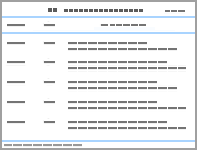
| 实验时间 | 被试人员 | 实验任务 | 采集数据形式 | 任务内容 | 任务时长 | 选取数据时长 |
|---|---|---|---|---|---|---|
| 9天 | 9名 | 模拟着舰 | EEG | 高难度着舰任务 低难度着舰任务 | 4~6分钟 | 200秒 |

"

"
| 层类型 | 参数 | 输出尺寸 | 输出表示 | 参数数量 |
|---|---|---|---|---|
| 卷积层 | 8×1×64 | 8×31×256 | F*C*T | 512 |
| 批归一化 | 8×31×256 | 16 | ||
| SEConv | 8×31×256 | 140 | ||
| 卷积层 | 8×31×1 | 8×1×256 | 248 | |
| 批归一化 | 8×1×256 | F*1*T | 16 | |
| 激活函数 | ELU | 8×1×256 | 0 | |
| 平均池化层 | 1×4 | 8×1×64 | F*1*T/4 | 0 |
| 正则化层 | 8×1×64 | 156 | ||
| SE | 16×1×64 | DF*1*T/4 | 64 | |
| 卷积层 | 16×1×16 | 16×1×64 | 256 | |
| 卷积层 | 16×1×1 | 16×1×64 | 256 | |
| 批归一化 | 16×1×64 | 32 | ||
| 激活函数 | ELU | 16×1×64 | 0 | |
| 平均池化层 | 1×8 | 16×1×8 | DF*1*T/32 | 0 |
| 正则化层 | 16×1×8 | 352 | ||
| 全连接层 | 128 | 512 | ||
| 全连接层 | 2 |
"
| 软件/硬件 | 版本/配置 |
|---|---|
| 操纵系统 | Windows10 |
| 处理器 | Intel(R)Core(TM)i7-10700HX CPU@2.90GHz |
| 内存 | 64 GB |
| 编程语言 | Python3.8.8 |
| 深度学习框架 | Pytorch1.9.1 |

"


"


"


"


"


"

"
| 模型 | 实验训练 | |||
|---|---|---|---|---|
| 准确率 | 召回率 | F1值 | 特异性 | |
| SVM | 53.05 | 51.21 | 56.43 | 80.87 |
| KNN | 53.88 | 69.33 | 59.94 | 85.40 |
| RandomForest | 61.77 | 59.68 | 59.13 | 78.49 |
| SSENet | 92.66 | 90.21 | 90.10 | 89.54 |
"
| 模型 | 实验训练 | |||
|---|---|---|---|---|
| 准确率 | 召回率 | F1值 | 特异性 | |
| CSP+SVM | 86.03 | 70.02 | 86.41 | 86.09 |
| CSP+KNN | 80.23 | 76.56 | 80.67 | 80.03 |
| CSP+ RandomForest | 82.61 | 73.46 | 82.67 | 82.42 |
| SSENet | 92.66 | 90.21 | 90.10 | 89.54 |
"
| 模型 | 实验训练 | ||||||
|---|---|---|---|---|---|---|---|
| 模型来源 | 第一折 | 第二折 | 第三折 | 第四折 | 第五折 | 均值 | |
| Tsception | 文献[34] | 89.02 | 91.66 | 86.11 | 90.27 | 87.63 | 88.94 |
| LGGNet | 文献[35] | 69.86 | 74.16 | 75.83 | 77.77 | 72.22 | 73.97 |
| EEG-Deformer | 文献[36] | 82.77 | 83.47 | 79.58 | 84.16 | 86.25 | 83.25 |
| EEGNet | 文献[37] | 89.64 | 86.60 | 86.69 | 88.75 | 88.92 | 88.17 |
| SSENet | 文中模型 | 92.50 | 92.91 | 92.22 | 93.19 | 92.50 | 92.66 |
"
| 模型 | 实验训练 | |||||
|---|---|---|---|---|---|---|
| 第一折 | 第二折 | 第三折 | 第四折 | 第五折 | 均值 | |
| SSENet-SE | 92.36 | 92.08 | 90.97 | 87.77 | 92.77 | 91.19 |
| SSENet-SEConv | 86.38 | 87.77 | 84.16 | 87.36 | 89.30 | 87.00 |
| SSENet-SE-SEConv | 88.61 | 84.16 | 88.33 | 88.05 | 88.47 | 87.52 |
| SSENet | 95.55 | 91.25 | 92.63 | 93.88 | 91.66 | 93.00 |

"


"

| [1] | LEE S, KIM J K. Factors Contributing to the Risk of Airline Pilot Fatigue[J]. Journal of Air Transport Management, 2018, 67:197-207. |
| [2] | HILDITCH C J, GREGORY K B, ARSINTESCU L, et al. Perspectives on Fatigue in Short-Haul Flight Operations from US Pilots:A Focus Group Study[J]. Transport Policy, 2023, 136:11-20. |
| [3] | LIU B, XIN X, JI M, et al. Can Family-Work Conflict Influence Safety Behavior in Airline Pilots? The Mediating Role of Fatigue and the Moderating Role of Extraversion[J]. Safety Science, 2023,160:106061. |
| [4] | VAN CUTSEM J, MARCORA S, DE PAUW K, et al. The Effects of Mental Fatigue on Physical Performance:A Systematic Review[J]. Sports Medicine, 2017, 47:1569-1588. |
| [5] | 刘晓雨, 孙立国, 谭文倩, 等. 基于相似构型决策的舰载机驾驶员建模与评估[J]. 航空学报, 2023, 44(4):113-128. |
| LIU Xiaoyu, SUN Liguo, TAN Wenqian, et al. Pilot Modeling and Evaluation of Carrier-Based Aircraft Based on Similar Configuration Decision-Making[J]. Acta Aeronautica et Astronautica Sinica, 2023, 44(4):113-128. | |
| [6] | 王秋富, 石治国, 张倬, 等. 舰载机着舰引导中鲁棒单目视觉相对位姿测量[J]. 航空学报, 2024, 45(23):330309-1-16. |
| WANG Qiufu, SHI Zhiguo, ZHANG Zhuo, et al. Robust Monocular Vision-Based Relative Pose Measurement in Carrier-Based Aircraft Landing Guidance[J]. Acta Aeronautica et Astronautica Sinica, 2024, 45(23):330309-1-16. | |
| [7] | 王永庆. 固定翼舰载战斗机关键技术与未来发展[J]. 航空学报, 2021, 42(8):21-34. |
| WANG Yongqing. Key Technologies and Future Developments of Fixed-Wing Carrier-Based Fighter Jets[J]. Acta Aeronautica et Astronautica Sinica, 2021, 42(8):21-34. | |
| [8] | ZENG H, ZHANG J, ZAKARIA W, et al. InstanceEasyTL:An Improved Transfer-Learning Method for EEG-Based Cross-Subject Fatigue Detection[J]. Sensors, 2020, 20(24):7251. |
| [9] |
SHANG L, SI H, WANG H, et al. Research on Fatigue Detection of Flight Trainees Based on Face EMF Feature Model Combination with PSO-CNN Algorithm[J]. Scientific Reports, 2024, 14(1):20641.
doi: 10.1038/s41598-024-71192-x pmid: 39232069 |
| [10] |
张丞, 何坚, 张岩, 等. 基于脑电与眨眼频率的可穿戴疲劳驾驶检测系统[J]. 计算机工程, 2017, 43(2):293-298.
doi: 10.3969/j.issn.1000-3428.2017.02.049 |
|
ZHANG Cheng, HE Jian, ZHANG Yan, et al. Wearable Fatigue Driving Detection System Based on EEG and Blink Frequency[J]. Computer Engineering, 2017, 43(2):293-298.
doi: 10.3969/j.issn.1000-3428.2017.02.049 |
|
| [11] | ADIN R M, CEREN A N, SALCI Y, et al., Dimensionality,Psychometric Properties,and Population-Based Norms of the Turkish Version of the Chalder Fatigue Scale Among Adults[J]. Health and Quality of Life Outcomes, 2022, 20(1):161. |
| [12] | AHLSTRÖM C, ANUND A. Development of Sleepiness in Professional Truck Drivers:Real-Road Testing for Driver Drowsiness and Attention Warning(DDAW) System Evaluation[J]. Journal of Sleep Research, 2024:e14259. |
| [13] | SU A T, XAVIER G, KUAN J W. The Measurement of Mental Fatigue Following an Overnight On-Call Duty Among Doctors Using Electroencephalogram[J]. PLoS ONE, 2023, 18(7):e0287999. |
| [14] | DU G, LONG S, LI C, et al. A Product Fuzzy Convolutional Network for Detecting Driving Fatigue[J]. IEEE Transactions on Cybernetics, 2022, 53(7):4175-4188. |
| [15] |
张荣, 梁馨月. 航空人员疲劳检测方法研究[J]. 计算机工程与应用, 2024, 60(20):84-95.
doi: 10.3778/j.issn.1002-8331.2403-0135 |
|
ZHANG Rong, LIANG Xinyue. Research of Fatigue Detection Methods for Aviation Personnel[J]. Computer Engineering and Applications, 2024, 60(20):84-95.
doi: 10.3778/j.issn.1002-8331.2403-0135 |
|
| [16] |
谷学静, 刘佳, 郭宇承, 等. 采用多尺度多路混合注意力机制的脑电情绪识别方法[J]. 计算机工程与应用, 2024, 60(19):130-138.
doi: 10.3778/j.issn.1002-8331.2309-0201 |
|
GU Xuejing, LIU Jia, GUO Yucheng, et al. EEG Emotion Recognition Method Using Multi-Scale Multi-Path Hybrid Attention Mechanism[J]. Computer Engineering and Applications, 2024, 60(19):130-138.
doi: 10.3778/j.issn.1002-8331.2309-0201 |
|
| [17] | YUAN D, YUE J, XIONG X, et al. A Regression Method for EEG-Based Cross-Dataset Fatigue Detection[J]. Frontiers in Physiology, 2023,14:1196919. |
| [18] | WU X, YANG J, SHAO Y, et al. Mental Fatigue Assessment by an Arbitrary Channel EEG Based on Morphological Features and LSTM-CNN[J]. Computers in Biology and Medicine, 2023,167:107652. |
| [19] | 赵朔, 奇格奇, 李培豪, 等. 基于脑电通道注意力机制的驾驶行为识别研究[J]. 交通运输系统工程与信息, 2024, 24(4):283-291. |
| ZHAO Shuo, QI Geqi, LI Peihao, et al. Research on Driving Behavior Recognition Based on EEG Channel Attention Mechanism[J]. Journal of Transportation System Engineering and Information, 2024, 24(4):283-291. | |
| [20] | 邓浩伟, 侯月皎, 张朝月, 等. 基于级联森林和多模态融合的脑力疲劳识别算法[J]. 北京航空航天大学学报, 2025, 51(2):584-593. |
| DENG Haowei, HOU Yuejiao, ZHANG Zhaoyue, et al. Brain Fatigue Recognition Algorithm Based on Cascade Forest and Multimodal Fusion[J]. Journal of Beijing University of Aeronautics and Astronautics, 2025, 51(2):584-593. | |
| [21] | 冯笑, 代少升, 黄炼. 基于可解释深度学习的单通道脑电跨被试疲劳驾驶检测[J]. 仪器仪表学报, 2023, 44(5):140-149. |
| FENG Xiao, DAI Shaosheng, HUANG Lian. Inter-Subject Fatigue Driving Detection Based on Interpretable Deep Learning with Single-channel EEG[J]. Journal of Instruments and Instrumentation, 2023, 44(5):140-149. | |
| [22] | 龚子安, 顾正晖, 陈迪. 基于局部与全局特征集成网络的跨被试驾驶疲劳检测(2024)[J/OL]. 计算机科学,[2024-10-23]. https://link.cnki.net/urlid/50.1075.tp.20240823.1505.006. |
| GONG Zi’an, GU Zhenghui, CHEN Di. Cross-Subject Driving Fatigue Detection Based on Local and Global Feature Ensemble Network(2024)[J/OL]. Computer Science,[2024-10-23]. https://link.cnki.net/urlid/50.1075.tp.20240823.1505.006. | |
| [23] | WANG L, JOHNSON D, LIN Y. Using EEG to Detect Driving Fatigue Based on Common Spatial Pattern and Support Vector Machine[J]. Turkish Journal of Electrical Engineering and Computer Sciences, 2021, 29(3):1429-1444. |
| [24] | 杨利英, 孟天昊, 张清杨, 等. 特征融合实现脑电信号情感分析[J]. 西安电子科技大学学报, 2022, 49(6):95-102. |
| YANG Liying, MENG Tianhao, ZHANG Qingyang, et al. Feature Fusion for EEG Signal Emotion Analysis[J]. Journal of Xidian University, 2022, 49(6):95-102. | |
| [25] | LI Y, HE J. A Review of Strategies to Detect Fatigue and Sleep Problems in Aviation:Insights from Artificial Intelligence[J]. Archives of Computational Methods in Engineering, 2024, 31(8):4655-4672. |
| [26] |
GRAMFORT A, LUESSI M, LARSON E, et al. MNE Software for Processing MEG and EEG Data[J]. Neuroimage, 2014, 86:446-460.
doi: 10.1016/j.neuroimage.2013.10.027 pmid: 24161808 |
| [27] | WANG Y, HAN M, PENG Y, et al. LGNet:Learning Local-Global EEG Representations for Cognitive Workload Classification in Simulated Flights[J]. Biomedical Signal Processing and Control, 2024,92:106046. |
| [28] |
TAHERI GORJI H, WILSON N, VANBREE J, et al. Using Machine Learning Methods and EEG to Discriminate Aircraft Pilot Cognitive Workload During Flight[J]. Scientific Reports, 2023, 13(1):2507.
doi: 10.1038/s41598-023-29647-0 pmid: 36782004 |
| [29] | SEGU M, TONIONI A, TOMBARI F. Batch Normalization Embeddings for Deep Domain Generalization[J]. Pattern Recognition, 2023,135:109115. |
| [30] | 翟凤文, 孙芳林, 金静. 多尺度卷积结合Transformer的抑郁脑电分类研究[J]. 西安电子科技大学学报, 2024, 51(2):182-195. |
| ZHAI Fengwen, SUN Fanglin, JIN Jing. Research on Depression EEG Classification Using Multi-Scale Convolution Combined with Transformer[J]. Journal of Xidian University, 2024, 51(2):182-195. | |
| [31] | TORSVALL L. Sleepiness on the Job:Continuously Measured EEG Changes in Train Drivers[J]. Electroencephalography and Clinical Neurophysiology, 1987, 66(6):502-511. |
| [32] | 范晓丽, 牛海燕, 周前祥, 等. 基于EEG的脑力疲劳特征研究[J]. 北京航空航天大学学报, 2016, 42(7):1406-1413. |
| FAN Xiaoli, NIU Haiyan, ZHOU Qianxiang, et al. Study on Mental Fatigue Features Based on EEG[J]. Journal of Beijing University of Aeronautics and Astronautics, 2016, 42(7):1406-1413. | |
| [33] | BLANCO-DÍAZ C F, GUERRERO-MENDEZ C D, DELISLE-RODRIGUEZ D, et al. Evaluation of Temporal,Spatial and Spectral Filtering in CSP-Based Methods for Decoding Pedaling-Based Motor Tasks Using EEG Signals[J]. Biomedical Physics & Engineering Express, 2024, 10(3):035003. |
| [34] | DING Y, ROBINSON N, ZHANG S, et al. Tsception:Capturing Temporal Dynamics and Spatial Asymmetry from EEG for Emotion Recognition[J]. IEEE Transactions on Affective Computing, 2022, 14(3):2238-2250. |
| [35] | DING Y, ROBINSON N, TONG C, et al. LGGNet:Learning from Local-Global-Graph Representations for Brain-Computer Interface[J]. IEEE Transactions on Neural Networks and Learning Systems, 2023:1-14. |
| [36] | DING Y, LI Y, SUN H, et al. EEG-Deformer:A Dense Convolutional Transformer for Brain-Computer Interfaces[J]. IEEE Journal of Biomedical and Health Informatics, 2025, 29(3):1-14. |
| [37] | LAWHERN V J, SOLON A J, WAYTOWICH N R, et al. EEGNet:A Compact Convolutional Neural Network for EEG-Based Brain-Computer Interfaces[J]. Journal of Neural Engineering, 2018, 15(5):056013. |
| [1] | LIU Na, YANG Yanbo, ZHANG Jiawei, LI Baoshan, MA Jianfeng. Research on the CNN network coding scheme for high-resolution image transmission [J]. Journal of Xidian University, 2025, 52(2): 225-238. |
| [2] | LIU Long, LI Haosheng, ZHANG Mengxuan, DU Ying, CHANG Yaqi, ZHANG Wenbo. Review of deep learning-based methods for driving facial animation [J]. Journal of Xidian University, 2025, 52(2): 57-84. |
| [3] | ZHANG Jing, WU Huixue, ZHANG Shaobo, LI Yunsong. Decoder-side enhanced image compression network under distributed strategy [J]. Journal of Xidian University, 2025, 52(1): 1-13. |
| [4] | WANG Chao, JIANG Xiaofeng, WANG Sumin. Research on the quantum effect traffic prediction algorithm oriented towards intuitive reasoning [J]. Journal of Xidian University, 2025, 52(1): 152-162. |
| [5] | ZHAO Congjian, JIAO Yiyuan, LI Yanni. Overview of deep sentence-level entity relation extraction [J]. Journal of Xidian University, 2024, 51(6): 117-131. |
| [6] | XU Haitao, LIU Yuzhe, YAN Xinyi, LI Jiaojiao, XUE Changbin. Fusion classification network for hyperspectral and LiDAR eature coupling modeling [J]. Journal of Xidian University, 2024, 51(6): 73-83. |
| [7] | WU Xinting, HUANG Ying, NIU Baoning, GUAN Hu, LAN Fangpeng, LIU Jie. Image texture-guided iterative watermarking model [J]. Journal of Xidian University, 2024, 51(5): 110-121. |
| [8] | ZHANG Mingjin, ZHOU Nan, LI Yunsong. Smooth interactive compression network for infrared small target detection [J]. Journal of Xidian University, 2024, 51(4): 1-14. |
| [9] | GAO Dihui, SHENG Lijie, XU Xiaodong, MIAO Qiguang. Joint feature approach for image-text cross-modal retrieval [J]. Journal of Xidian University, 2024, 51(4): 128-138. |
| [10] | WAN Pengwu, HUI Xi, CHEN Dongrui, WU Bo. Modulation recognition based on the two-dimensional asynchronous in-phase quadrature histogram [J]. Journal of Xidian University, 2024, 51(4): 78-90. |
| [11] | HAO Mengnan, LI Ying, SONG Guanghui. Superimposed pilots transmission for unsourced random access [J]. Journal of Xidian University, 2024, 51(3): 1-8. |
| [12] | GUAN Yepeng, SU Guangyao, SHENG Yi. Time series prediction method based on the bidirectional long short-term memory network [J]. Journal of Xidian University, 2024, 51(3): 103-112. |
| [13] | HE Wangpeng, HU Deshun, LI Cheng, ZHOU Yue, GUO Baolong. Siamese network tracking using template updating and trajectory prediction [J]. Journal of Xidian University, 2024, 51(3): 46-54. |
| [14] | LIU Wei, WANG Mengyang, BAI Baoming. Efficient semantic communication method for bandwidth constrained scenarios [J]. Journal of Xidian University, 2024, 51(3): 9-18. |
| [15] | LIU Zhenyan, ZHANG Hua, LIU Yong, YANG Libo, WANG Mengdi. Efficient seed generation method for software fuzzing [J]. Journal of Xidian University, 2024, 51(2): 126-136. |
|
||
