

Journal of Xidian University ›› 2025, Vol. 52 ›› Issue (5): 88-98.doi: 10.19665/j.issn1001-2400.20250806
Previous Articles Next Articles
LI Yongbo( ), DU Jianchao(), WANG Junning(), ZHANG Mingjin()
Received:2025-03-03
Online:2025-10-20
Published:2025-09-09
Contact:
DU Jianchao
E-mail:liyongbo@stu.xidian.edu.cn;jcdu@xidian.edu.cn;xdtidsp@mail.xidian.edu.cn;mjinzhang@xidian.edu.cn
CLC Number:
LI Yongbo, DU Jianchao, WANG Junning, ZHANG Mingjin. Collaborative attention mechanism-based iris segmentation algorithm[J].Journal of Xidian University, 2025, 52(5): 88-98.

"


"


"


"


"

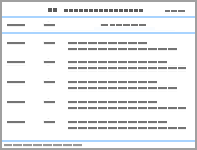
"
| 模型 | CASIA-Iris-Degradation | Eye-Tracking1.0 | CASIA-Iris-v1 | |||||
|---|---|---|---|---|---|---|---|---|
| IoU | Acc | IoU | Acc | IoU | Acc | |||
| Osiris | 0.653 | 0.679 | 0.589 | 0.611 | 0.899 | 0.912 | ||
| U-Net | 0.853 | 0.898 | 0.813 | 0.887 | 0.927 | 0.958 | ||
| DeepLabV3 | 0.867 | 0.905 | 0.825 | 0.879 | 0.923 | 0.949 | ||
| SRN-Unet | 0.893 | 0.923 | 0.871 | 0.912 | 0.951 | 0.980 | ||
| IrisParseNet | 0.905 | 0.917 | 0.892 | 0.901 | 0.939 | 0.987 | ||
| 文中模型 | 0.943 | 0.962 | 0.927 | 0.957 | 0.948 | 0.982 | ||

"

"
| U-Net | 区域注意力 机制 | 质量感知 注意力机制 | CASIA-Iris-Degradation | Eye-Tracking1.0 | CASIA-Iris-v1 | |||||
|---|---|---|---|---|---|---|---|---|---|---|
| IoU | Acc | IoU | Acc | IoU | Acc | |||||
| + | 0.853 | 0.898 | 0.813 | 0.887 | 0.927 | 0.958 | ||||
| + | + | 0.894 | 0.927 | 0.864 | 0.919 | 0.936 | 0.969 | |||
| + | + | 0.877 | 0.924 | 0.859 | 0.915 | 0.935 | 0.966 | |||
| + | + | + | 0.943 | 0.962 | 0.927 | 0.957 | 0.948 | 0.982 | ||

"

| [1] | LI P H, WU G L, MA H W. Iris Recognition via Non-Local Region Association and Probability Modeling[J]. Acta Electronica Sinica, 2014, 42(12): 2379-2385. |
| [2] | 叶学义, 廖奕艺, 王鹤澎, 等. 面向虹膜识别的多方向中心对称局部二值模式[J]. 计算机辅助设计与图形学学报, 2023, 35(8): 1269-1278. |
| YE Xueyi, LIAO Yiyi, WANG Hepeng, et al. Multi-Directional Centrosymmetric Local Binary Pattern for Iris Recognition[J]. Journal of Computer-Aided Design & Computer Graphics, 2023, 35(8): 1269-1278. | |
| [3] | 季毕胜, 叶学义, 廖奕艺, 等. 基于FREAK算符及双向最近汉明距的非理想虹膜识别算法[J]. 计算机应用与软件, 2024, 41(7): 192-199. |
| JI Bisheng, YE Xueyi, LIAO Yiyi, et al. Non-Ideal Iris Recognition Algorithm Based on FREAK operator and Bidirectional Nearest Hamming distance[J]. Computer Applications and Software, 2024, 41(7): 192-199. | |
| [4] |
LEI S, SHAN A, LIU B, et al. Lightweight and Efficient Dual-Path Fusion Network for Iris Segmentation[J]. Scientific Reports, 2023, 13(1): 14034.
doi: 10.1038/s41598-023-39743-w pmid: 37640750 |
| [5] |
DAUGMAN J. How Iris Recognition Works[J]. IEEE Transactions on Circuits and Systems for Video Technology, 2004, 14(1): 21-30.
doi: 10.1109/TCSVT.2003.818350 |
| [6] | 孙正, 陈兆学, 李晓萌, 等. 基于单位扇环灰度的虹膜定位算法[J]. 光学技术, 2019, 45(2): 228-234. |
| SUN Zheng, CHEN Zhaoxue, LI Xiaomeng, et al. Iris Location Algorithm Based on Method of Gray Value of Unit Sector Area[J]. Optical Technique, 2019, 45(2): 228-234. | |
| [7] | 路陈红, 卢朝阳. 快速有效的虹膜图像分割方法[J]. 西安电子科技大学学报, 2007, 34(2): 254-258. |
| LU Chenhong, LU Zhaoyang. Fast and Efficient Iris Segmentation Method[J]. Journal of Xidian University, 2007, 34(2): 254-258. | |
| [8] | JALILIAN E, UHL A. Iris Segmentation Using Fully Convolutional Encoder-Decoder Networks[C]// International Conference on Biometrics. Berlin:Springer, 2017: 133-145. |
| [9] | ZHOU R Y, SHEN W Z. PI-Unet: Research on Precise Iris Segmentation Neural Network Model for Heterogeneous Iris[J]. Computer Engineering and Applications, 2021, 57(15): 223-229. |
| [10] |
ZHANG W, LU X, GU Y, et al. A Robust Iris Segmentation Scheme Based on Improved U-Net[J]. IEEE Access, 2019, 7:85082-85089.
doi: 10.1109/ACCESS.2019.2924464 |
| [11] | 孙佳倩, 朱金荣, 张小宝, 等. 基于集成学习的虹膜分割算法[J]. 电子科技, 2024, 41(11): 1-7. |
| SUN Jiaqian, ZHU Jinrong, ZHANG Xiaobao, et al. Research on Iris Segmentation Algorithm Based on Ensemble Learning[J]. Electronic Science and Technology, 2024, 41(11): 1-7. | |
| [12] |
PROENÇA H, ALEXANDRE L A. Toward Noncooperative Iris Recognition: A Classification Approach Using Multiple Signatures[J]. IEEE Transactions on Pattern Analysis and Machine Intelligence, 2007, 29(4): 607-612.
pmid: 17299218 |
| [13] |
LIAN S, LUO Z, ZHONG Z, et al. Attention Guided U-Net for Accurate Iris Segmentation[J]. Journal of Visual Communication and Image Representation, 2018, 56: 296-304.
doi: 10.1016/j.jvcir.2018.10.001 |
| [14] |
LIU N, ZHANG M, LI H, et al. DeepIris: Learning Pairwise Filter Bank for Heterogeneous Iris Verification[J]. Pattern Recognition Letters, 2019, 82: 154-161.
doi: 10.1016/j.patrec.2015.09.016 |
| [15] | ZHAO Z, KUMAR A. Towards More Accurate Iris Recognition Using Deeply Learned Spatially Corresponding Features[C]// Proceedings of the IEEE International Conference on Computer Vision. Piscataway: IEEE, 2017: 3809-3818. |
| [16] | 徐泽夫, 王晶晶, 曾冠中, 等. 眼动跟踪仪的光源布局优化方法[J]. 红外与激光工程, 2024, 53(10):214-225. |
| XU Zefu, WANG Jingjing, ZENG Guanzhong, et al. Optimization Method for Light Layout of Eye Tracking Device[J]. Infrared and Laser Engineering, 2024, 53(10):214-225. | |
| [17] | WOO S, PARK J, LEE J Y, et al. CBAM: Convolutional Block Attention Module[C]// Proceedings of the European Conference on Computer Vision (ECCV). Berlin:Springer, 2018: 3-19. |
| [18] |
孔佳琳, 张琪, 王财勇, 等. 异质虹膜识别研究综述[J]. 计算机科学, 2024, 51(6): 186-197.
doi: 10.11896/jsjkx.231200175 |
|
KONG Jialin, ZHANG Qi, WANG Caiyong, et al. Review of Heterogeneous Iris Recognition[J]. Computer Science, 2024, 51(6): 186-197.
doi: 10.11896/jsjkx.231200175 |
|
| [19] | WANG C Y, ZHANG Q, LIU J X. A Novel Iris Segmentation Method Based on Phase Congruency and Improved Level Set[J]. Multimedia Tools and Applications, 2018, 77(5): 6015-6032. |
| [20] |
LI Y H, SAVVIDES M. An Automatic Iris Occlusion Estimation Method Based on High-Dimensional Density Estimation[J]. IEEE Transactions on Pattern Analysis and Machine Intelligence, 2013, 35(4): 784-796.
doi: 10.1109/TPAMI.2012.169 |
| [21] | 薛宇超. 虹膜质量评价与识别问题研究[D]. 吉林: 吉林大学, 2024. |
| [22] | 杨岗, 周奥, 张东兴. 基于注意力机制的人脸虹膜双特征融合识别[J]. 计算机工程与设计, 2023, 44(7): 2177-2184. |
| YANG Gang, ZHOU Ao, ZHANG Dongxing. Dual-feature Fusion Recognition of Face and Iris Based on Attention Mechanism[J]. Computer Engineering and Design, 2023, 44(7):2177-2184. | |
| [23] | MILLETARI F, NAVAB N, AHMADI S A. V-Net:Fully Convolutional Neural Networks for Volumetric Medical Image Segmentation[C]// 2016 Fourth International Conference on 3D Vision (3DV). Piscataway: IEEE, 2016: 565-571. |
| [24] | Institute of Automation, Chinese Academy of Sciences. CASIA Iris Image Database (2019)[DB/OL]. [2024-01-01]. http://biometrics.idealtest.org/. |
| [25] | LONG J, SHELHAMER E, DARRELL T. Fully Convolutional Networks for Semantic Segmentation[C]// Proceedings of the IEEE Conference on Computer Vision and Pattern Recognition. Piscataway: IEEE, 2015: 3431-3440. |
| [26] | CHEN L C, PAPANDREOU G, SCHROFF F, et al. Rethinking Atrous Convolution for Semantic Image Segmentation (2017)[J/OL]. [2024-01-01]. https://arxiv.org/abs/1706.05587. |
| [27] | JALILIAN E, UHL A. Iris Segmentation Using Fully Convolutional Encoder-decoder Networks[C]// International Conference on Biometrics. Berlin:Springer, 2017: 133-145. |
| [28] | WANG C, WANG Y, XU B, et al. A Lightweight Multi-Label Segmentation Network for Mobile Iris Biometrics[C]// ICASSP 2020-2020 IEEE International Conference on Acoustics, Speech and Signal Processing (ICASSP). Piscataway: IEEE, 2020: 1006-1010. |
| [1] | WANG Keyan, ZONG Xingpeng, CHENG Jicong, DONG Xinyu, LI Yunsong. Jointcolor fusion and feature enhancement network for low-light image dehazing [J]. Journal of Xidian University, 2025, 52(5): 1-12. |
| [2] | SUN Yuwen, XIE Rong, WANG Yefei, XU Shuwen, LIU Zheng. Method for recognizing multifunctional radar working modes based on the ST-GCN [J]. Journal of Xidian University, 2025, 52(5): 121-132. |
| [3] | WANG Changguang, SHI Haoyi, LI Qingru, WANG Fangwei. Steganalysis scheme for combining element-wise multiplication and orthogonal fusion [J]. Journal of Xidian University, 2025, 52(5): 183-192. |
| [4] | ZHU Zhiyuan, LI Jie, TANG Tong, LV Yi, WU Dapeng, WANG Ruyan. Semantic communication system for text-based screen content image transmission [J]. Journal of Xidian University, 2025, 52(5): 26-38. |
| [5] | SUN Fuxiong, MENG Wenjin, SUN Yiling, LI Yangyi, YIN Yukai. Research on system loganomaly detection based on semi-supervised learning [J]. Journal of Xidian University, 2025, 52(4): 15-32. |
| [6] | GE Jingrui, QIN Guoxuan, ZHANG Wei. Lightweight self-supervised monocular depth estimation combining multi-scale attention [J]. Journal of Xidian University, 2025, 52(4): 66-76. |
| [7] | FENG Jin, GUO Jie, ZHANG Mingjin, LI Yunsong, XU Zhiyuan. Channel pruning via an adaptive guidance mechanism optimized by the dual-domain progressive optimization algorithm [J]. Journal of Xidian University, 2025, 52(3): 202-216. |
| [8] | KANG Haiyan, LIU Xinxu, LI Yanfang. Research on the task offloading methodology for vehicular edge networks enabled by the blockchain [J]. Journal of Xidian University, 2025, 52(3): 85-98. |
| [9] | LIU Na, YANG Yanbo, ZHANG Jiawei, LI Baoshan, MA Jianfeng. Research on the CNN network coding scheme for high-resolution image transmission [J]. Journal of Xidian University, 2025, 52(2): 225-238. |
| [10] | JIN Heng, SUN Yuochao, ZENG Yining, LIU Weicheng, GUO Yuanyuan. Pilot mental fatigue assessment method based on the SSENet [J]. Journal of Xidian University, 2025, 52(2): 33-46. |
| [11] | LIU Long, LI Haosheng, ZHANG Mengxuan, DU Ying, CHANG Yaqi, ZHANG Wenbo. Review of deep learning-based methods for driving facial animation [J]. Journal of Xidian University, 2025, 52(2): 57-84. |
| [12] | ZHANG Jing, WU Huixue, ZHANG Shaobo, LI Yunsong. Decoder-side enhanced image compression network under distributed strategy [J]. Journal of Xidian University, 2025, 52(1): 1-13. |
| [13] | QU Jiahui, HE Jie, DONG Wenqian, LI Yunsong, ZHANG Tongzhen, YANG Yufei. Change detection method based on multi-scale and multi-resolution information fusion [J]. Journal of Xidian University, 2025, 52(1): 105-116. |
| [14] | WANG Chao, JIANG Xiaofeng, WANG Sumin. Research on the quantum effect traffic prediction algorithm oriented towards intuitive reasoning [J]. Journal of Xidian University, 2025, 52(1): 152-162. |
| [15] | LI Linke, CHEN Jie, LIU Jun. Improved schemes and applications of the neural network differential distinguisher [J]. Journal of Xidian University, 2025, 52(1): 196-214. |
|
||
